













By Kate Wasniewski, Staff Writer
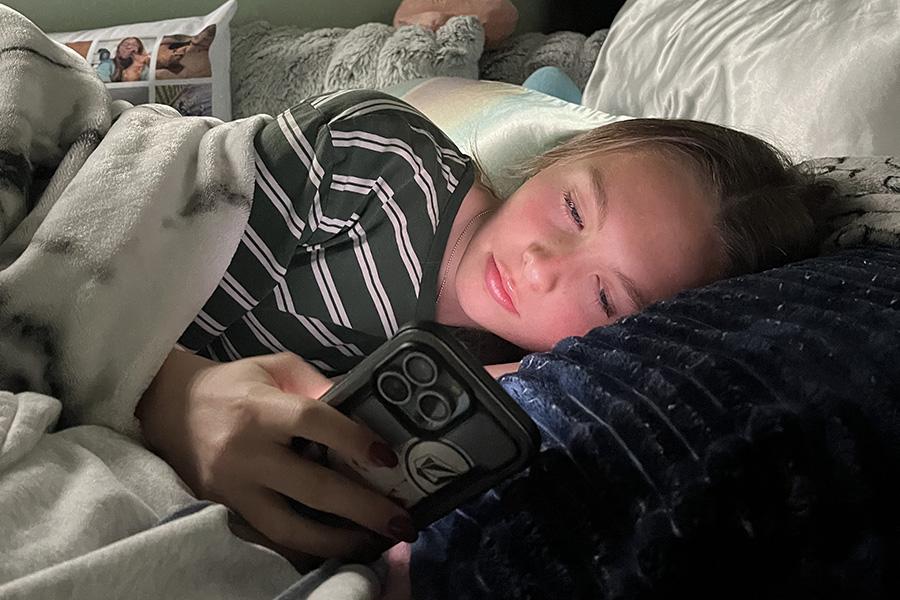
Scrolling through TikTok, you constantly see post after post of new products. Always liking and sharing videos you see of influencers showing “must have” products leaves a question to ponder: Are these influencers making content for the good of their followers, or just to make a quick buck?
The rise of social media during the 2000s has had a variety of positive benefits such as being able to communicate more easily and sharing new ideas across the internet, but constant scrolling can be a toxic environment for our generation to grow up in.
Social media began to take a turn as different apps like TikTok and Instagram became more popular. Not only are users contributing to this, but the content creators working behind the entire purpose of these apps helps to keep the apps trending. Influencers sharing and creating content, I believe, has done more harm than good.
Influencers are creators on social media platforms with a large number of followers, creating content to entertain users. Influencers are given a certain amount of money per post, depending on the amount of views, likes and followers they obtain. Influencers can fall into a constant loop of money, money, money.
Creating content can be easy with just one video you post quickly amassing hundreds or thousands of views, whether that was your intention or not. You are able to have a video go viral quickly and gain a large number of supporters in a short amount of time. I believe this is where influencers take advantage of their gains and are quickly filled with arrogance. There is a subconscious hierarchy that revolves around how many followers you have on any social media platform.
Influencer culture is known to involve hauls of items people buy, and unboxing PR packages that brands have sent to the influencers. New things to buy and being shown what you “need” to wear to be trendy each season are being thrown in your head every time you open an app on your phone.
How these influencers take advantage of you without you even knowing is simple: They get paid to promote a product (whether they actually enjoy it or not). Followers enjoy watching the influencer and they believe if they like it, that means they must get it as well. This not only gives the product more attention, but also the influencer promoting it.
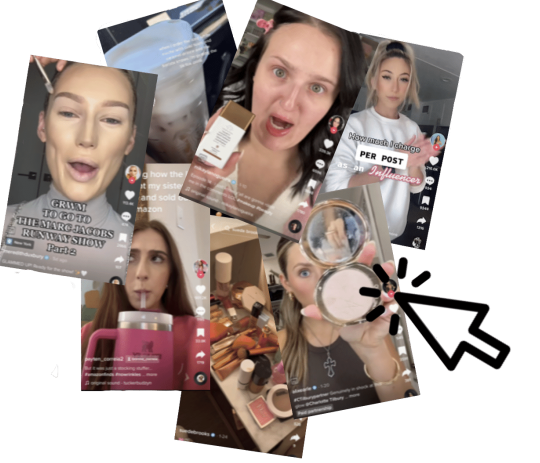
Alix Earle, a social media influencer with a growing following of 4.4 million, started gaining supporters after sharing her favorite makeup products on TikTok. She has become a widely known content creator, with many people calling her the new “It Girl” on TikTok. People see her videos, take interest in what she does, and once they see a product she uses and promotes, they are going to want to buy that product to be like her.
People follow what is trendy, and this is when social media starts being toxic.
As soon as something goes viral, good luck trying to find it in stores for the next month. And if you’re one of the lucky people to get your hands on it, you’ll be paying extra because online and in-store prices skyrocket as a result of the product becoming more popular.
Tasman UGG slippers, Rare Beauty blush, Aritzia Super Puff, and claw clips have begun to take over the internet. Tasman UGGs were sold out on the UGG website for months during the past winter holidays. Rare Beauty blush has been cleared from every shelf in Sephora. All thanks to influencers who pushed these products.
De-Influencing, which is the opposite of influencing, is starting to tell the truth about influencer culture. People are shining a light on the truth about products that are trending and starting to bring the problem of overconsumption to the surface.
Influencers are constantly receiving free items from brands and then promoting them on their own social media platforms, which may be helpful for the brands themselves, but is creating a worldwide overconsumption issue.
Constantly purchasing new items just to be trendy is only creating more products that will eventually become waste, unable to be broken down. Nowadays, most teens go on Instagram or TikTok to look at recommendations and reviews on products. Just because something is trendy doesn’t always mean it is beneficial and will work for you.
We are in this constant cycle of following trend after trend. Social media has begun to fill up our lives and our eyes are glued to a screen. We want what other people have, and influencers aren’t making it any better.
Our generation has become so fixated on this idea of being “perfect” because of social media. An ideal body, clear skin and expensive clothes is an unrealistic ideal, and these online influencers are definitely a big part of it. Influencers are able to make their life look a certain way, either by staging or editing photos. We begin to compare our own life to these influencers. We are comparing ourselves to a lie, to the idea of someone who might not even exist.
It’s hard to tell what is real or fake on social media, and with content creators constantly sharing posts and products that earn themselves money, it’s hard to be able to trust what they say. Next time you give an influencer attention on social media, ask yourself if you genuinely enjoy what they are promoting or talking about, or if you are just jumping on the bandwagon of trends.
Sophomore Kate Wasniewski can be reached at [email protected].