









By Minna-Kate Thomas, Special to Nighthawk News
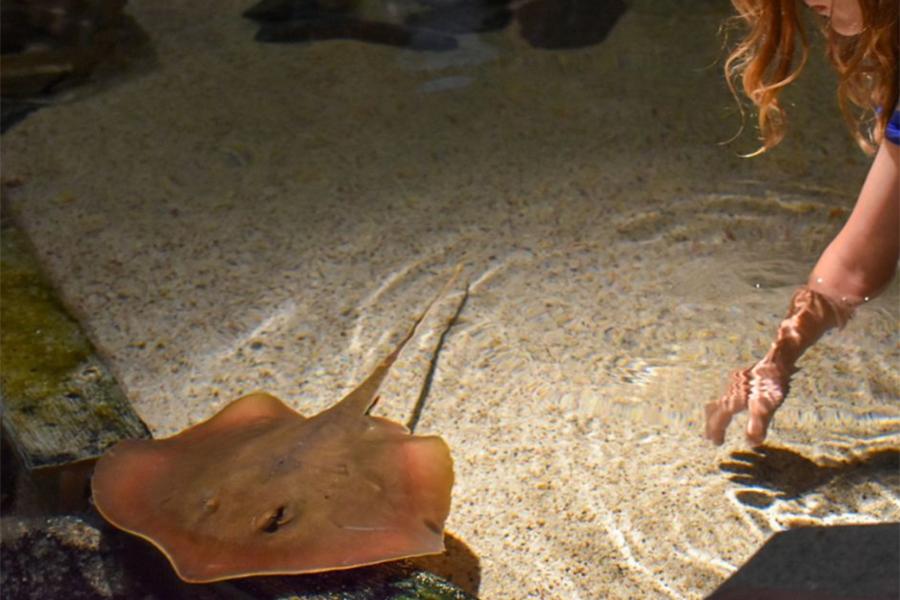
Nested deep in the North Carolina Aquarium on Roanoke Island is a little room bumping with people trying to touch a stingray, even if it’s just a quick touch. While gathered around the tank watching the stingrays glide past, you hear a volunteer telling people repeatedly to only touch the stingrays with one or two fingers on their backs.
Suddenly, you hear … SPLASH! And a voice calls out over the radio, “Well, one fell in…”
Taylor McConnell comes back to the touch pool room after leaving a Coast Guard volunteer alone in the room. She laughs as she recalls the harmless incident, saying, “ ‘Don’t let anyone fall in – that’s the only job today,’ and within 10 minutes, he calls me on the radio. ‘Well, one fell in.’ ”’
McConnell serves as the volunteer coordinator at the popular spot for tourists and locals alike on the Outer Banks. The aquarium covers 61,000 square feet with 2,200-plus animals and, yes, the boring ol’ informational sections that some people enjoy studying and others quickly pass by on their way to the next colorful fish.
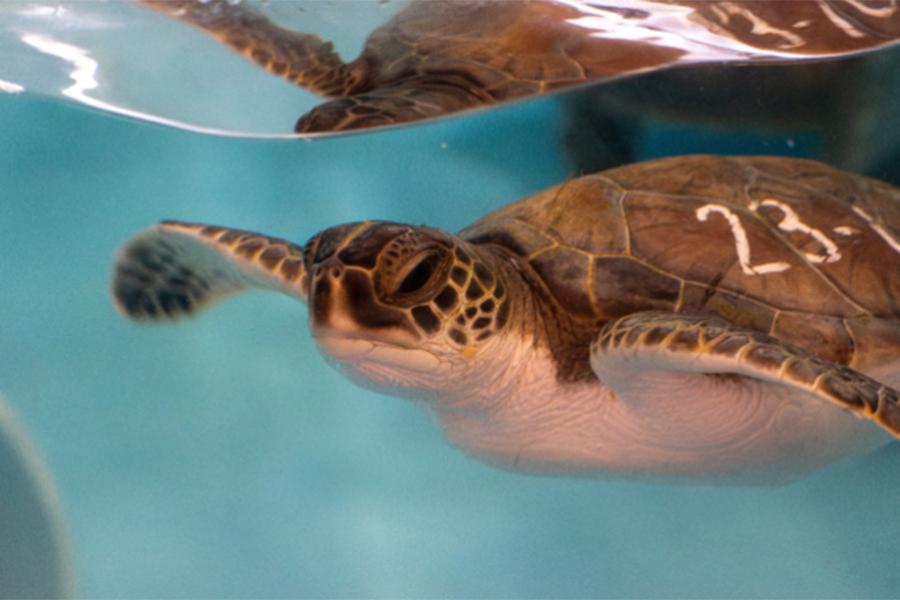
The aquarium has two general areas, the inside exhibits and habitats and the outside exhibits. The inside consists of eight exhibits and habitats: Seven Rivers, Wild Wetlands, the STAR Center for sea turtles, Sea Treasures, Sea Senses, Delicate Drifters, Ironclad Sanctuary and Graveyard of the Atlantic. Outside, visitors can enjoy Backyard Buzz and Pollinator Habitat Garden. Backyard Buzz is along the nature walk that the aquarium also has and is full of life-size bugs, while the garden is full of plants and bees pollinating.
The touch tanks have two different species of about a dozen rays. There is a brown shaded one that has more of a slimy, slick feeling. That one is the Atlantic stingray. Then you have the yellow/sand shaded one that has spots on its body, which is the yellow stingray (surprisingly, right?).
Atlantic rays are definitely the more social of the two, whereas the yellow ones tend to go into the no-touch zone in the tank more.
The most popular question people ask the volunteers is, “Will the stingray hurt me?” The answer is no, because the stingrays get their barbs trimmed every two months, so they can’t hurt people. A common followup question is, “Does cutting their barbs hurt them?” That’s also a no.
“Clipping the barbs is kind of the best option that we’ve seen so far,” McConnell said. “There’s been some research where if you remove the barb completely to where it will not grow back there, that can change their behavior, almost as if they know they don’t have their defense mechanism. When we clip it, they don’t necessarily realize that their defense mechanism isn’t there because the base of it is there.”
The aquarium isn’t just run by staff. Most of the time, the people you are talking to and asking questions of in the habitats or different rooms are volunteers. Volunteers have a big role in the aquarium and help keep things rolling. For example, if there are no volunteers available to help in a certain area, staff members have to step in to help, which can be a challenge if that staff member is on a time crunch or needs to tend to other animals.
McConnell said it can be especially challenging asking the same group of volunteers to keep coming in, especially during the holidays, but visitors to the aquarium definitely appreciate all the friendly faces they encounter.
“I realize how much appreciation I have for these volunteers who dedicate so much of their time into protecting our marine life,” sophomore Charlotte Nultemeier said.
A number of students have found ways to volunteer at the aquarium.
“I really like getting to meet the animals,” sophomore Jaylen Lindsey said. “I think it’s a fun way to spend your weekend, just sit by the stingrays. I also really like interacting with the people and teaching them about animals.”
Some volunteers have gotten some pretty weird questions. Freshman Colette Langanke was asked one that left her pretty startled, and she didn’t quite know what to say: “Are these stingrays? The ones that killed Steve Irwin?”
If helping animals, answering the occasional odd question and – of course – making sure no one falls into a touch tank sound interesting to you, contact McConnell at 252-475-2335 or [email protected] to learn more about volunteer opportunities.
Sophomore Minna-Kate Thomas wrote this story for her Intro to Publications semester project. She can be reached at [email protected].