











By Christopher Young-Stone, Staff Writer
As other neighboring states received the good news that their shores were safe from offshore drilling, North Carolina’s representatives waited and hoped to be included in President Trump’s executive order.
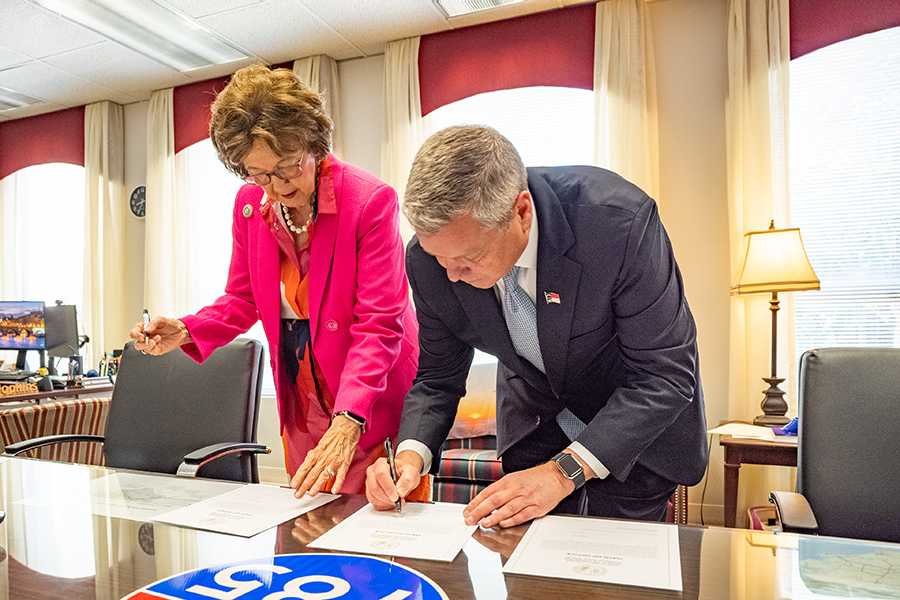
In September, Trump signed an executive order that bans offshore drilling for 10 years in the states of Florida, Georgia and South Carolina, but North Carolina was excluded. Gov. Roy Cooper of North Carolina wrote to the president, asking that the Tarheel state be included in the moratorium, while Sen. Thom Tillis also lobbied for change.
“Over the last several years, I have listened to mayors and elected officials from Brunswick to Currituck County, and have been adamant that any decision on new energy production off North Carolina’s coast should be made with the input of our local communities,” Tillis said. “Following the announcement of an offshore drilling moratorium, I urged President Trump to include North Carolina.”
On Sept. 25, Trump officially extended the moratorium to include North Carolina, but noted that he could “change things very easily” and failed to extend the moratorium to include the entire East Coast.
Local residents of the Outer Banks, including members of The Surfrider Foundation and the North Carolina Coastal Federation, have long vocalized their opposition to offshore drilling. Chapter members of the Surfrider Foundation have traveled to Raleigh to voice their concerns to the Bureau of Ocean Energy Management, which ultimately leases offshore coastal areas to oil drilling companies.
“I believe it was 2010 when our chapter really started focusing on our anti-drilling campaign,” said Ivy Ingram, who served various positions on the Surfrider board from 2006-2019. “Our campaign strategy was to get the local municipalities to pass resolutions and slowly we started gaining support that way. We also focused on it from a jobs perspective: Why risk our current economy for the potential of oil, which could be disastrous in the event of a spill?”
A Bureau of Ocean Energy Management meeting in May 2015 was set to discuss community concerns about oil drilling off the coast. Many other community events were held to protest oil drilling during this time, including anti-oil drilling floats in multiple parades.
“The BOEM meeting that was held in Kill Devil Hills was the most attended public hearing BOEM’s ever held, with over 500 people attending,” Ingram said.
In addition to the Outer Banks, leaders from 45 North Carolina communities have officially spoken out against drilling off the North Carolina coast. Cooper made a statement in late September appreciating the fact that all those voices finally had been heard.
“It’s good the President finally appears to have listened to the bipartisan voices of North Carolinians, who for years have been fighting this administration to stop oil drilling off our coast,” Cooper said. “I will stay vigilant and ready to resume the fight in the event the federal government makes any move toward offshore drilling.”
Sophomore Christopher Young-Stone can be reached at [email protected].