








By Samuel Smith, Opinions Editor
It’s 9:30 on a Thursday night. Four of us survey the scene: a middle-aged moving man whose son was born a few weeks prior; a recent high school graduate at the beginning of his new moving job; my friend Cash with a burrito that nobody was quite sure where it came from; and me – with a bleeding laceration from dropping a dresser on my ankle.
After hours of uninterrupted moving, and a brief scream of anger directed toward a box TV from 1994, our group took a break surrounded by the boxes and furniture acquired over the course of 15 years that had yet to be moved. Let’s rewind and see how this mess of a night came to fruition.
Two months prior, I was living in the house I had lived in my entire life. The earliest memory I have is standing in the living room of said house talking about how smart I am for a 2-year-old (a narcissist I may be, but at least I’ve been consistent for a decade).
I had seen friends and family move before. Something would happen and they would find a new place and live with it, but I always felt like they were handling it far better than I could have. Instead of thinking too hard about how I would react, I reasoned that I would never have to worry about it.
I had my house. It had always been my house. That could never change.
To put it bluntly, that changed.
To spare you the legal mumbo jumbo, events led to my family no longer having our house. We were all sad, save my dog Rosy, who was ecstatic to be getting pity treats. When I got the news, I called my best friend, made a few jokes, teared up a bit and did all of the grand-scale coping in a matter of 30 minutes.
I think the length of my coping is due to the fact that I didn’t have to worry about the fundamental details. I knew we had friends and family in the area who would welcome us with open arms – that we had a safety net that would ensure me having a home and that I was going to be all right no matter what. I was never going to be without the likes of food and shelter, never in a million years.
Once we started actually looking for a new place to live, however, the worries began to arise.
In the Outer Banks right now, those looking to sell their houses will make a beautiful profit, while those looking to buy are left in the dust, or more aptly, the sand.
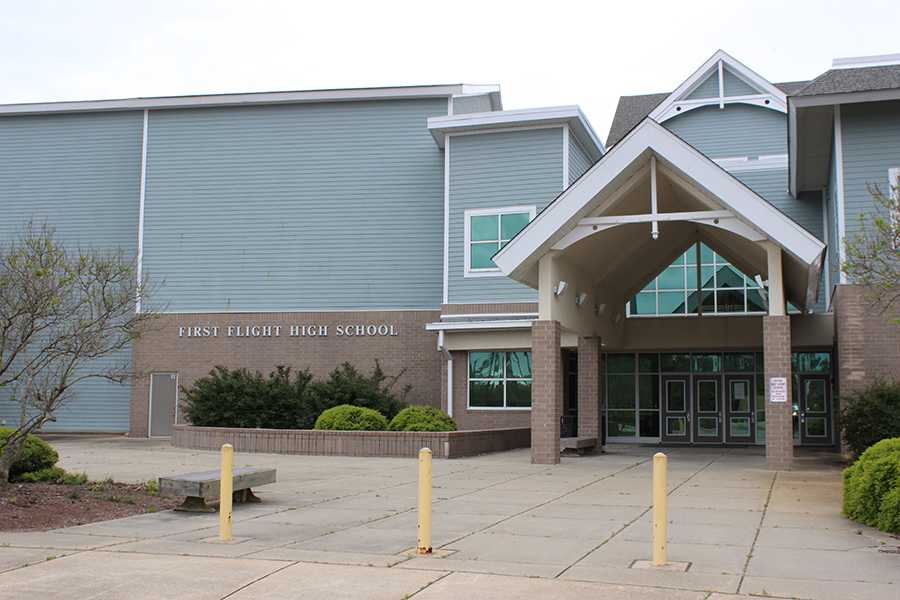
The reasons behind such an occurrence can be seen in First Flight High School itself. For those unaware, the student populace within FFHS has increased drastically. The sheer number of individuals in the hallways between classes has seen a notable change since previous years.
The same goes for the Outer Banks as a whole. There are far more people on the beach for any number of reasons, all looking for housing in much the same way my family was. Sellers have their pick of the litter and, given basic economics, the highest bidder wins, leaving the average Joe or Janet to shuffle off and try to find another new house.
Mere weeks after finding out I was losing my house, I came to find out that some of my friends in school, friends at my job and even the lady who cuts my hair into the gorgeous shape it’s in are all experiencing the exact same problem with housing.
I learned this fun thing in AP Biology about competition. Zero competition is bad, since in the wild it means one group will grow unimpeded and ruin the environment. Moderate competition is good, since it keeps each group in check without leading to resource depletion. Now, given what we know about too many potential buyers on the Outer Banks, can you guess what too much competition does?
Too much competition means everybody loses. The market is great, so many owners with occupants in rental houses are ending those leases and evicting the occupants in favor of selling the home to someone who will pay top dollar for it.
Those “average” people looking to either find a new rental or buy a house of their own – such as myself and my aforementioned friends – simply can’t match up to the price being asked of them.
As I said, I had a safety net. I had the privilege of knowing that no matter what happened, I would be all right. Not everybody has that privilege. As a matter of fact, a worryingly large portion of our peers, acquaintances, friends and maybe even family don’t have that guarantee.
Without having gone through this house debacle, I wouldn’t have understood the problem plaguing the beach I call home. If this continues, people we all know and love won’t be able to call it home anymore. This isn’t something political or the fault of any one person; it’s an institutional issue that results from some people wanting more than what works, and others needing more than what doesn’t.
At the end of the day, until the “housing crisis” dies down, all I can emphasize is a safety net. I had my friends to help me move and make my new house seem like an actual home. If you’re going through a similar situation, here’s hoping you too will find a house, but until then, find those people or things that make wherever you are, a home.
Junior Samuel Smith can be reached at [email protected].