
















By Emmy Benton, News Editor
Locals on the Outer Banks are no stranger to severe weather affecting the coast. From hurricanes to nor’easters, they know what to do in the case of extreme weather. Most weather except snow, that is.
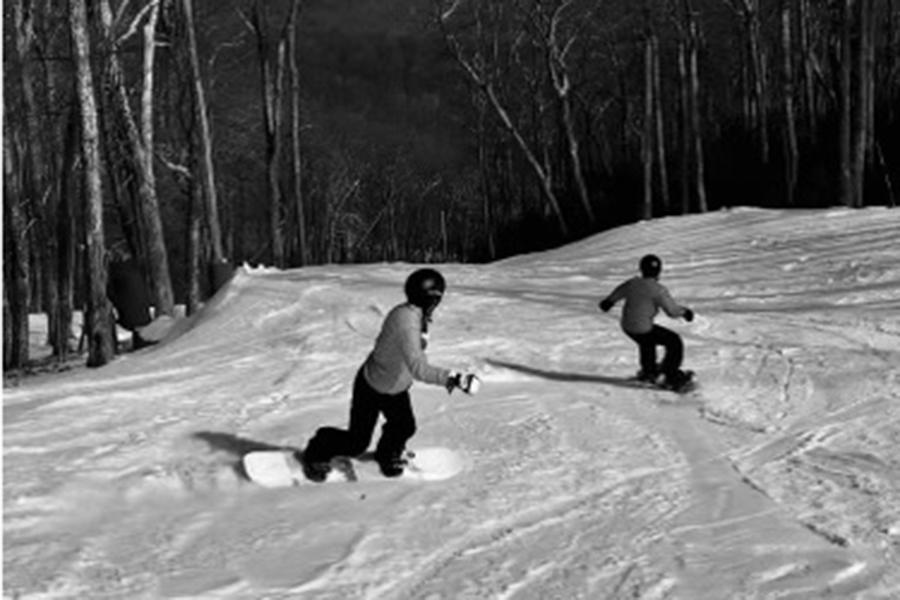
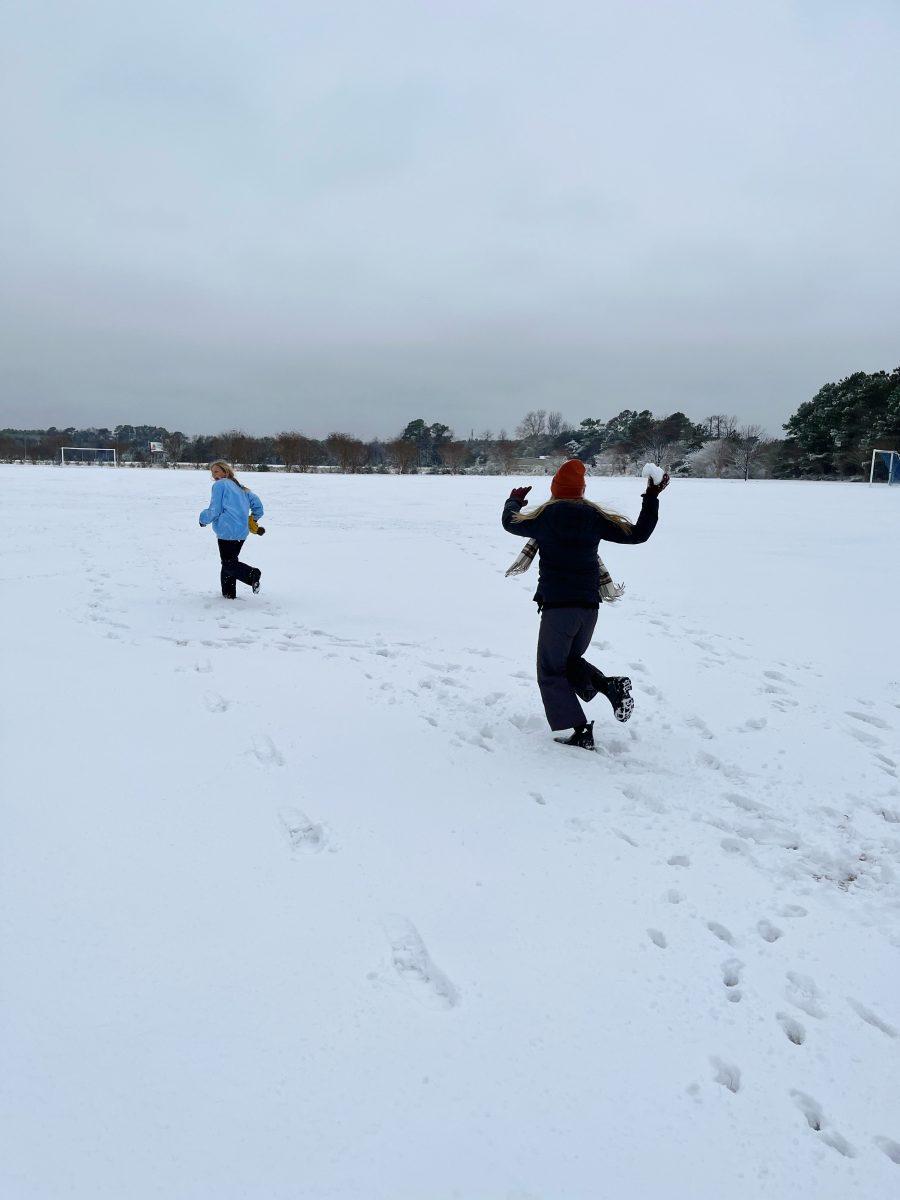
The Outer Banks got a taste of winter weather during the last two weekends of January that proved to be less than what some hoped for. Even though the snow melted quickly and wasn’t a major problem for the roads, some were still slippery and hazardous.
Junior Mary Kathryn Stroud drove in Duck on Jan. 22 and was met with wet roads in some areas.
“There was a lot of slush, snow and puddles all over the road,” Stroud said. “I had to drive slower than normal because of the puddles and slick places.”
This is just what the North Carolina Department of Transportation (NCDOT) advises people to do if they have to drive on slippery roads. Even further, they urge people to stay off the roads if possible when extreme winter weather is predicted to affect their area. If travel is required, officials encourage drivers to “slow down and maintain a safe following distance” between them and other cars.
People on the Outer Banks don’t usually have to worry about driving in wintry weather, but occasionally these guidelines apply to the area.
There are certain conditions that need to be present for snow to fall, and these don’t normally happen in Dare County. Jeff Edmondson, the Chief Meteorologist for WAVY News 10, attributes our rare snowfall to the water that surrounds us.
“The ocean near the OBX has a south to north current that keeps the air a little warmer,” Edmondson said. “The water in the sound also is warmer. To get deep cold arctic air, and to get heavy snow, is tricky. We need to get a deep cold pool of air to develop to our north and get some of the cold air in the atmosphere above our area.”
Along with this, the temperature in the atmosphere needs to stay cold in order for snow to form and stay as snow as it falls to the ground. Snow forms when ice crystals in clouds stick together to become snowflakes.
Meteorologists track winter storms and forecast them just as they would with any other weather event. Edmondson generally uses the Global Forecast System (GFS), the European Model, and the North American Model as a means to track storms.
“We look at several weather models,” Edmondson said. “Since we live in a coastal region, that can affect the accuracy of the models. Some perform better than others in the area.”
The meteorologists who predict the weather and the weather models they use help workers for NCDOT take the necessary precautions to keep roadways clear.
Jeff Ryder, the NCDOT County Maintenance Engineer for Dare County, works with the other 13 counties that make up Division 1 of NCDOT to coordinate winter weather efforts in Northeastern North Carolina.
“We work as a group to help each other out, and if we need help from other divisions throughout the state, we’ll call them down,” Ryder said.
The state of North Carolina has about 2,150 dump trucks equipped with plows and salt-and-sand spreaders to clear roads and make them less slippery.
“All the trucks are assigned to a county,” Ryder said. “Here in Dare we have anywhere from four to seven trucks available at any time for any snow storm. That ranges from snowplows to salt spreaders or brine equipment in the back.”
This winter, there were a number of back-to-back winter storms across North Carolina that called for thousands of tons of salt to be spread, but Dare County didn’t experience this same threat.
“We don’t have a big supply here in Dare County because the state average for snowfall is one storm per year,” Ryder said. “We have a very small yard here in Manteo, so we only keep on hand 80 tons of salt.”
The last time Dare County had to use snow plows to remove snow from the roads was in 2018, when the Outer Banks saw eight to 10 inches of snow in some areas. With substantial amounts of snowfall being so rare, people on the Outer Banks can forget what it feels like to be in a winter wonderland.
But Edmondson provides a little piece of hope that we may get more than a snowball’s chance in… well, you know…
“When we have high snow winters in January in the region (Norfolk and Elizabeth City), we tend to get snow in February and March,” Edmondson said.
Junior Emmy Benton can be reached at [email protected].