













By Maddy Wagner, Staff Writer
The United States has entered week four of the government shutdown, making it the longest such closure in our nation’s history. Its effects are being felt in communities across the country, and the Outer Banks is no exception.
The 24-day shutdown is a result of stalled negotiations between President Donald Trump and Congress over his demand for more than $5 billion in funding to build a wall along the United States’ border with Mexico. Lawmakers on Capitol Hill, particularly the Democrat-led House of Representatives, are refusing to concede to what House Speaker Nancy Pelosi and other Democrats have referred to as a “waste of money.”
While the shutdown has closed visitor services at the National Park Service sites, causing minor inconveniences for guests, its impact has taken a far larger toll on the many federal workers who call eastern North Carolina home.
Coast Guard employees are among those who, because of the shutdown, have either been furloughed (when employees are temporarily laid off from work without pay) or continue to work without pay. The Department of Homeland Security (DHS), which includes the Coast Guard, is not protected during this shutdown. Other branches of the military fall under the Department of Defense, which is currently being funded during the shutdown.
Randy Hartnett, the commanding officer of the U.S. Coast Guard’s Aviation Logistics Center based in Elizabeth City, explained how the shutdown has been affecting him and his department.
“It’s very frustrating: 497 of my 554 U.S. government employees have been furloughed without pay, and 57 are being required to work without pay,” Hartnett said. “Two hundred of my active-duty military personnel are being required to work without pay.”
This not only impacts how the department operates, it also affects the families of the employees required to work without knowing when their next paycheck will come.
“Every day it gets harder and harder, because not getting paid means that things start adding up fast,” said Hartnett’s daughter, Emma, a sophomore at First Flight.
The government shutdown has had lesser effects in other areas of the county. Lee Nettles, executive director of the Outer Banks Tourism Bureau, said that because the shutdown occurred in the winter, it’s had a minimal effect on tourism.
“The National Park Service closures have been an inconvenience for visitors, but we don’t believe it’s affecting the decision to come here,” Nettles said. “Also, January is typically the slowest month of the year for us in terms of visitation, so the impact, at least to this point, has been limited.”
According to local media outlets, the restrooms at Whalebone Junction, the Cape Hatteras Lighthouse and the Ocracoke Visitor Center are open as of this past weekend. Trash services have also be re-instituted at several National Park Service sites along the Outer Banks. Funding for these services are reportedly coming from fees generated from entry, camping, and lighthouse climbing that had previously been collected.
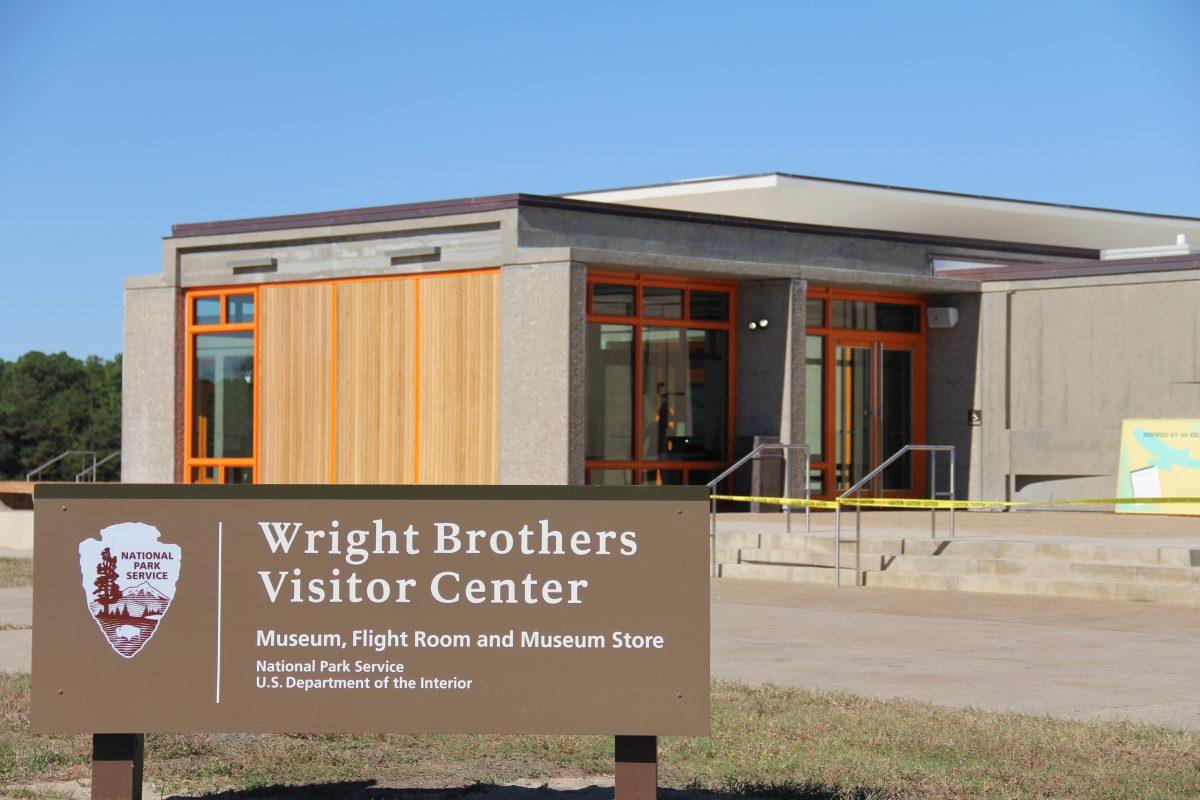
The effects of the shutdown on National Park Service visitors were seen more over winter break when more tourists were in town and visiting the Wright Brothers National Memorial. But the closure didn’t seem to stop guests from enjoying the historic site. Not letting the closed gate stop them, they parked along U.S. 158 to enter the park on foot and enjoy the history.
“There is very little to no impact on county operations up to this point,” said Public Information Officer Dorothy Hester. “Depending on how long it lasts, federal funding and reimbursements that the county receives could be delayed.”
Willo Kelly, chief executive officer of the Outer Banks Association of Realtors, explained that there are not many effects on the housing and building industry so far.
“Due to FEMA’s (Federal Emergency Management Agency) reversal two weeks ago on renewals and writing new flood insurance policies, the government shutdown has not had as great an impact on the housing industry here,” Kelly said. “Mortgage closings are not held up when the National Flood Insurance Program is operating as business as usual.”
How long the shutdown will last is unknown, but as the days keep adding up and federal workers continue to be out of work, experts are predicting that the impacts will be far reaching and long lasting. And even on the Outer Banks, 307 miles away from Washington, it’s clear that the impacts are being felt as the nation waits for its leaders to find a solution to the deadlock.
Sophomore Maddy Wagner can be reached at [email protected].
Anonymous • Jan 14, 2019 at 9:03 pm
The president was elected because of his promise to secure our build a wall, as securing our national defence is a priority. It is his job to serve the people, and he is just doing his job and nothing more, no matter what your opinion on the wall is. It is his job to do everything in his power to grt what those who elected him want done. If you want change, please advocate for Congress to be forced to pass a budget instead of writing or promoting this liberal nonsense.
Steve Hanf • Jan 14, 2019 at 9:15 pm
This story uses two sentences to mention the wall – and Congressional Democrats – to explain the backstory of the budget impasse. That’s because the story isn’t “liberal nonsense” about the argument over the wall, but a chance for our readers to see how the government shutdown is impacting families on the OBX.
Thanks for reading – Steve Hanf, adviser